
October is the quietest month in this trade, and it’s a trap.
Some night in the next several weeks — you know the one, first real hard freeze, wind driving the cold into every crawl space in your market — pipes are going to split. Not one or two. Dozens, across your whole service area, in the same few hours. Some will be found at 5 a.m. by a homeowner standing in a flooding kitchen. Others will let go at the thaw, which is when the real damage calls start.
Understand what a burst pipe is worth. The Insurance Information Institute’s 2025 report puts water damage and freezing at 22.6% of all homeowners insurance claims — the second most common category there is — with one in 67 insured homes filing a water or freezing claim in a typical year, and an average paid claim of $15,400. That’s the scale of disaster on the other end of the phone. For the shop that gets there, it’s emergency work at emergency rates for a customer who is not shopping around, not haggling, and not putting it off until spring.
Every plumber in your area will be busy that week. The question winter asks isn’t whether you’ll have demand. It’s whether the demand lands on your schedule — or on the schedule of the shop that answered first, stocked better, and stayed reachable at 2 a.m. That’s decided now, in October, while it’s quiet.
The shape of the surge
Freeze calls don’t arrive like normal demand, and they don’t arrive all at once — they come in two waves.
The freeze itself brings the frozen-line calls: no water, or water in one bathroom, from people who caught it early. Those are good jobs and quick ones if you’ve got the gear. Then the temperature climbs, the ice lets go, and the split pipes announce themselves all at once — that’s the burst wave, and it’s bigger, wetter, and worth more per ticket. Shops that have worked a few winters will tell you the thaw day is the longest day of the year.
Layer on the calendar. The season doesn’t even wait for the freeze: Roto-Rooter’s own numbers put day-after-Thanksgiving call volume at roughly 50% above an average Friday, as house guests and garbage disposals overwhelm tired plumbing. Then the cold snaps stack on top. From late November into February, the pattern is the same everywhere the temperature drops: nights, early mornings, and weekends — exactly the hours a small shop is hardest to reach.
Prep the truck, the rota, and the phone
None of the preparation is glamorous. All of it is easier this month than during the event.
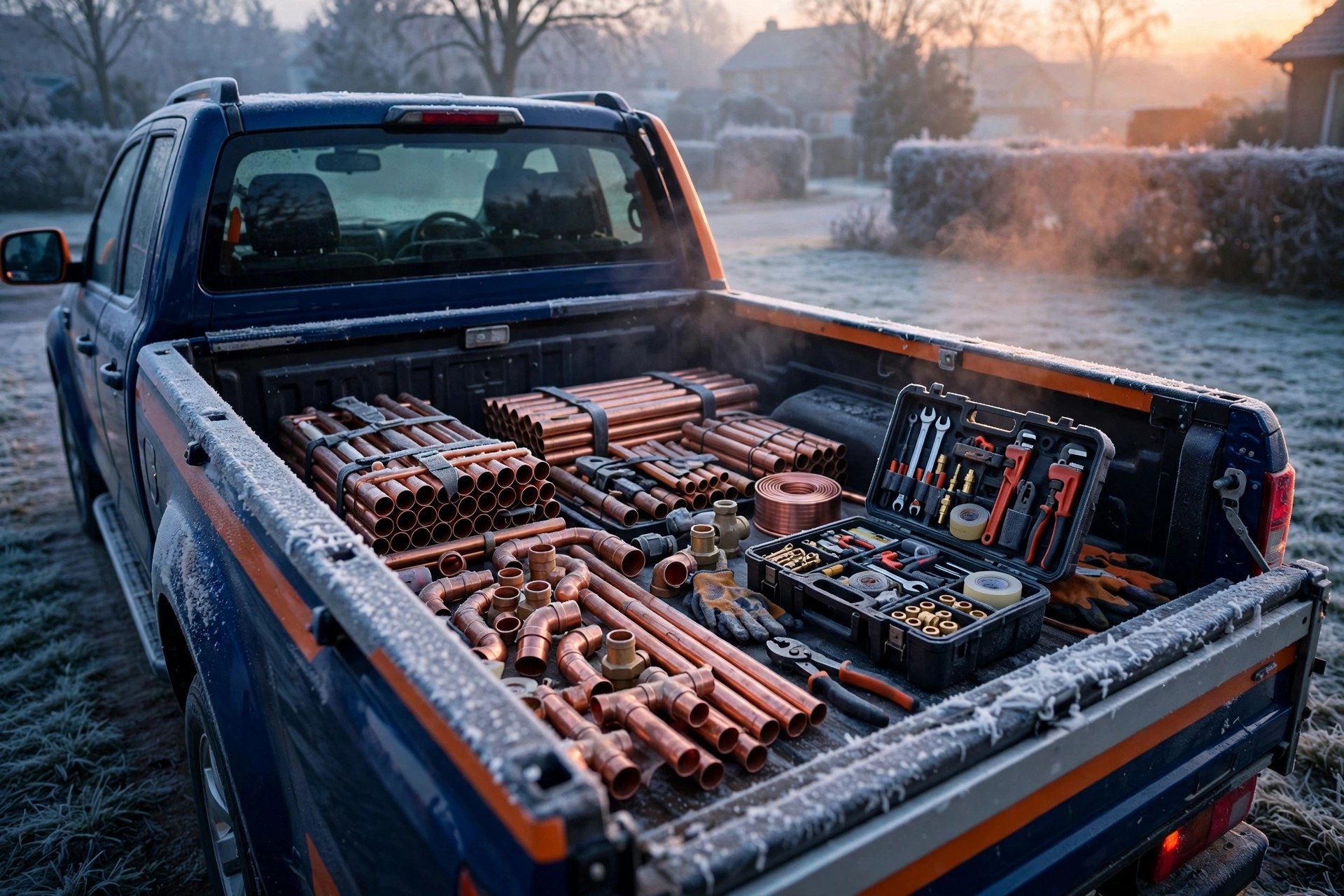
Stock for the job you’ll actually get. Repair couplings and caps in the sizes your housing stock actually uses, a coil of PEX and copper, shutoff keys, pipe insulation and heat cable for the follow-up work, and the thawing gear serviced and on the truck — not in the back corner of the shop. The expensive sentence in January is “I have to run to the supply house,” said to a homeowner watching water come through their ceiling.
Write the on-call rota down. Who’s first call this week, who’s backup, what the after-hours rate is, and who has authority to quote it. Rotate it fairly and publish it to the crew now, while it’s a schedule and not an argument. Freeze week burns out the shops where the owner personally answers everything for nine straight days.
Decide how a 2 a.m. request reaches a human. This is the whole game, and you already know why: a caller with water running doesn’t leave a voicemail and wait — they dial the next name on the list and keep dialing. So the chain has to work while you’re asleep or under a house: call forwarding to whoever’s on call, an answering service that can reach them, text-back on missed calls, and a callback request that hits a phone instead of an inbox. However you build it, test it on a Tuesday night before the weather tests it for you.
The homeowner advice is your marketing
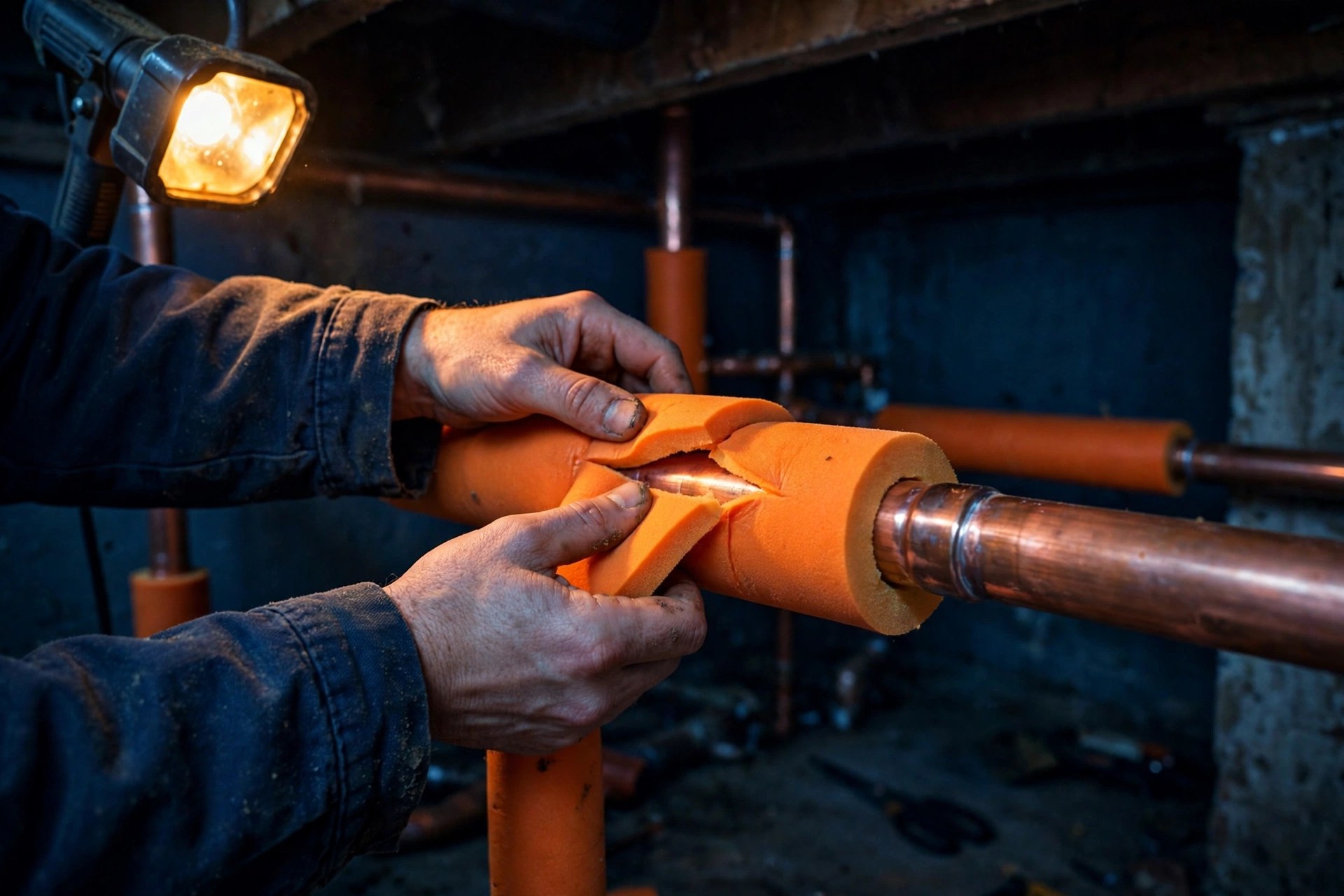
Everything you’d tell a homeowner about winter prep — let faucets drip on the coldest nights, open the cabinet doors under sinks on exterior walls, keep the heat at 55° or higher even when traveling, disconnect the garden hoses, insulate the exposed lines in the basement and crawl space, and know where your main shutoff is before you need it — is sound advice. It’s also the best marketing you’ll send all year, and almost nobody sends it.
Take twenty minutes and put it in a text or email to every past customer on your list: “Cold weather’s coming — here’s the five-minute version of protecting your pipes, and if anything lets go, here’s our number.” Three things happen. Some of them do the prep and never need you — and remember who looked out for them. Some find the slow drip or the aging water heater while they’re down there looking, and book real maintenance work on a calm October schedule instead of an emergency one. And when a pipe does burst at their neighbor’s house at 6 a.m., your name is the one already in their phone.
It’s goodwill, it’s booked work in a slow month, and it’s your number saved in a few hundred phones before the freeze. That is the whole playbook in one message.
When the freeze hits, you’re already set up
This is the payoff for doing the boring work early. The shops that win winter aren’t smarter or bigger. They stocked the truck while it was warm, they wrote the rota down, their phone gets answered at hours when yours used to ring out, and their name is already sitting in their past customers’ phones. Freeze week just reveals who prepared — the demand was never the prize. Being reachable, ready, and first is.
That’s also why Bello’s quiz runs the way it does. When a homeowner in the Des Moines and West Des Moines metro wakes up to water on the floor at 2 a.m., they don’t browse a directory — they answer a few questions and their request goes to exactly one Featured Partner, with the problem already described, instead of being blasted to every shop in the area or sold four times over. In a week when you’re triaging, a request that arrives pre-qualified and exclusively yours is the difference between a schedule you control and a phone you chase. If you want the territory before the temperature drops, the details are on the Featured Partner page. Winter is coming either way — the only choice is whose phone it rings.